


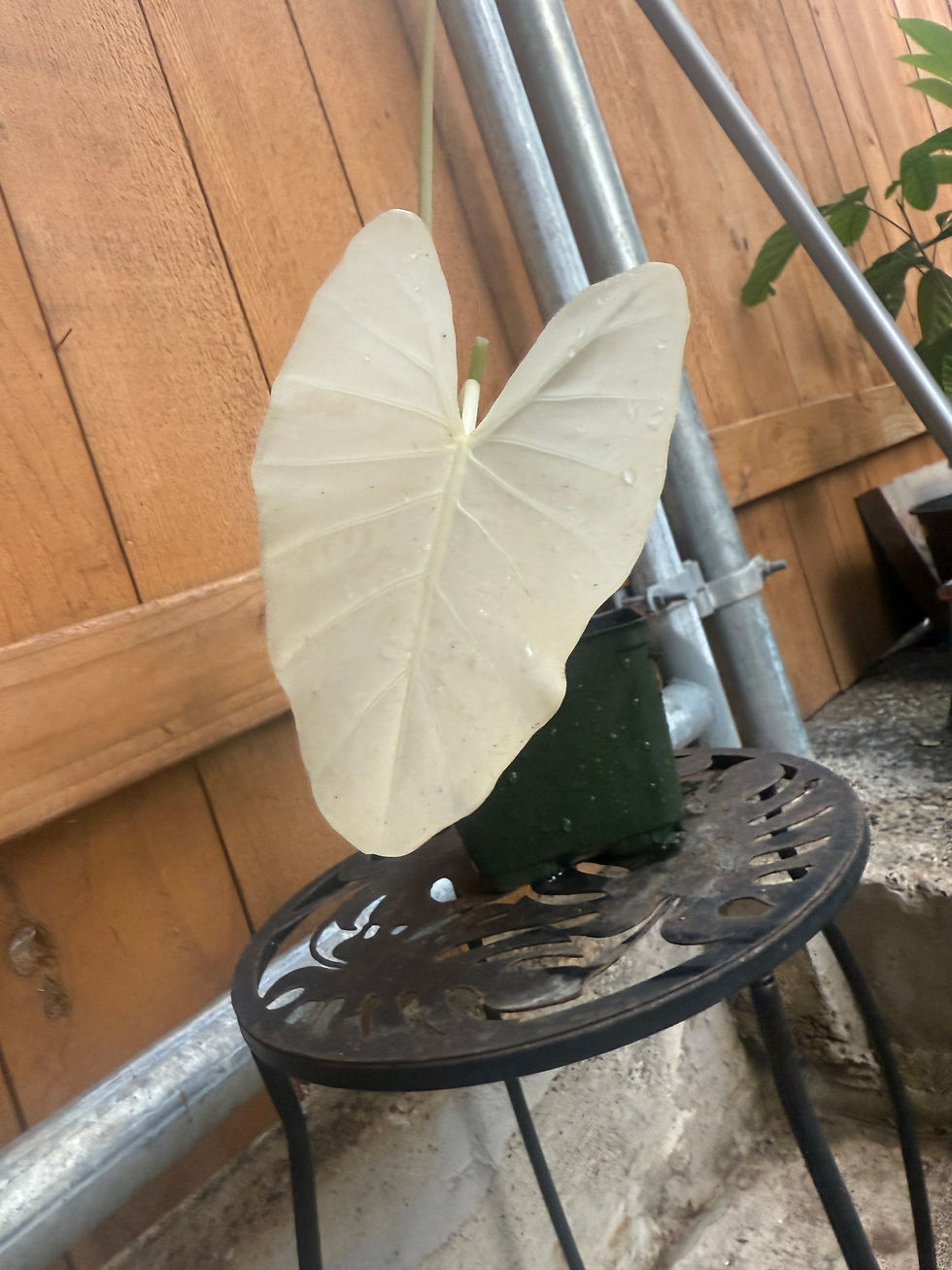


Alocasia Polly
Light
Bright indirect light, all day. Aim for 800 to 1,500 foot-candles. Below about 400 the plant survives but stops producing leaves and the silver veining dulls.
Best placements indoors:
Directly in front of an east window, where it gets an hour or two of gentle morning sun
Two to four feet back from a south or west window, or behind a sheer curtain
Under a grow light at 12 to 14 inches for 10 to 12 hours a day, if no window works
Too much light shows up first as a bleached, grayish wash across the leaf center, then as dry tan patches that stay flat rather than spreading. Too little shows up as long stretched petioles, new leaves smaller than the ones before them, and a plant that leans hard toward the glass.
Turn the pot a quarter turn each week. The petioles are long and they will commit to one direction fast.
Water and water quality
Water when the top inch to inch and a half of mix has dried, then water thoroughly until it runs freely from the drain holes. Empty the saucer. 'Polly' wants evenly moist, never wet and never bone dry — it is the plant most often killed by a strict weekly schedule applied through a cool, dark month.
Check with a finger or a wooden skewer rather than the calendar. In a warm bright spot that may mean every four or five days in summer and every ten to fourteen days in winter.
Water quality matters more with this plant than with most houseplants. Alocasias are sensitive to accumulated salts, chlorine and chloramine, and fluoride. The signature symptom is a thin brown rim that follows the whole leaf margin, often with a yellow halo just inside it, on a plant that is otherwise watered correctly.
If you see that, switch to rainwater, distilled, or reverse osmosis. Letting tap water sit out overnight releases chlorine but does nothing for chloramine or fluoride, which is what most municipal systems now use. Either way, flush the pot with a large volume of clean water every four to six weeks to carry built-up salts out the bottom.
